
Hyundai Sonata Service Schedule PDF: A Comprehensive Guide
Maintaining your Hyundai Sonata requires adherence to a strict service schedule, readily available as a downloadable PDF. This ensures longevity and peak performance, covering routine checks and vital component replacements.
Understanding the Importance of a Service Schedule
A consistent Hyundai Sonata service schedule is paramount for preserving its value, reliability, and safety. Regular maintenance, as outlined in the official PDF, proactively addresses potential issues before they escalate into costly repairs. Following the schedule ensures optimal engine performance, efficient fuel consumption, and the smooth operation of all vehicle systems.
Ignoring recommended service intervals can lead to diminished performance, increased emissions, and even component failure. Adhering to the schedule also safeguards your warranty, as many manufacturers require proof of regular maintenance for claim eligibility. The PDF provides a clear roadmap for preventative care, maximizing your Sonata’s lifespan and providing peace of mind on every journey. Prioritize scheduled maintenance for a dependable driving experience.
Locating the Official Hyundai Sonata Service Schedule PDF
Finding the official Hyundai Sonata service schedule PDF is crucial for accurate maintenance. Begin by visiting the official Hyundai website and navigating to the “Owners” section. There, you can typically input your Sonata’s model year and trim level to access the specific PDF document. Alternatively, authorized Hyundai dealerships can readily provide a copy, either digitally or in print.

Beware of unofficial sources, as they may contain inaccurate or outdated information. Always prioritize the PDF directly from Hyundai or a trusted dealership. Some online Hyundai forums may host links, but verify their authenticity. Ensure the document corresponds to your exact Sonata model year for precise service recommendations. A reliable source guarantees correct intervals and procedures.
Decoding the Hyundai Sonata Service Schedule
The Hyundai Sonata service schedule PDF utilizes a mileage-based system, outlining required maintenance at specific intervals (e.g., 7,500, 15,000, 30,000 miles). Each interval lists tasks like oil changes, filter replacements, fluid checks, and tire rotations. Pay close attention to “severe usage” conditions – frequent short trips, towing, or dusty environments – which may necessitate more frequent servicing.
The schedule also differentiates between “inspect” and “replace” actions. Inspection means a technician assesses the component’s condition, while replacement signifies a necessary change. Understand the symbols and abbreviations used; Hyundai provides a key within the PDF. Following this schedule diligently ensures your Sonata remains reliable and maintains its warranty coverage.
Regular Maintenance Tasks
Consistent upkeep is crucial for your Sonata’s health. This includes routine oil changes, tire care, fluid level checks, and timely filter replacements—essential for optimal performance.
Oil Change Intervals
Determining the correct oil change interval for your Hyundai Sonata is paramount for engine longevity. Hyundai’s recommended schedule varies based on driving conditions and the type of oil used. Generally, with conventional oil, intervals are around 7,500 miles or six months, whichever comes first. However, utilizing synthetic oil allows for extended intervals, often reaching 7,500-10,000 miles or even longer, depending on the specific synthetic blend and your driving habits.
Severe driving conditions – frequent short trips, stop-and-go traffic, towing, or extreme temperatures – necessitate more frequent oil changes. Always consult your Sonata’s service schedule PDF for the precise recommendation tailored to your model year and driving style. Ignoring these guidelines can lead to increased engine wear and potential costly repairs. Regular oil changes ensure proper lubrication, cooling, and contaminant removal, safeguarding your engine’s performance.
Conventional Oil vs. Synthetic Oil
Choosing between conventional and synthetic oil for your Hyundai Sonata impacts maintenance schedules and engine protection. Conventional oil is refined directly from crude oil, offering adequate lubrication for standard driving conditions. However, it breaks down faster and provides less protection at extreme temperatures.
Synthetic oil, created through a more complex process, boasts superior thermal stability, enhanced lubrication, and better resistance to oxidation. This translates to extended oil change intervals and improved engine protection, particularly in harsh conditions. While typically more expensive upfront, synthetic oil can save money long-term by reducing engine wear and potentially extending the life of your Sonata. Refer to your vehicle’s service schedule PDF to confirm compatibility and recommended intervals for each oil type.
Tire Rotation and Inspection
Regular tire rotation is crucial for even wear and maximizing the lifespan of your Hyundai Sonata’s tires. The service schedule PDF outlines recommended rotation patterns – typically front-to-back or a cross pattern – usually every 7,500 to 15,000 miles, coinciding with oil changes.
Alongside rotation, thorough tire inspections are vital. Check for uneven wear, cuts, bulges, and proper inflation pressure. Maintaining correct pressure, as indicated on the driver’s side doorjamb, improves fuel efficiency and handling. Inspecting tread depth ensures adequate grip, especially in wet or snowy conditions. Ignoring tire issues can compromise safety and lead to costly replacements. Consult your Sonata’s PDF for specific tire recommendations and inspection guidelines.
Fluid Level Checks and Top-Ups
Your Hyundai Sonata relies on various fluids for optimal operation. The service schedule PDF emphasizes regular checks and top-ups of these essential liquids. This includes brake fluid, vital for stopping power; coolant, preventing overheating; and power steering fluid, ensuring smooth steering.
Additionally, monitor windshield washer fluid for clear visibility. Low fluid levels can indicate leaks, requiring professional attention. The PDF details the correct fluid types for your specific Sonata model year. Ignoring fluid maintenance can lead to component damage and safety hazards. Consistent monitoring, as outlined in the schedule, contributes to a reliable and safe driving experience, preventing unexpected breakdowns and costly repairs.
Brake Fluid
Maintaining correct brake fluid levels is paramount for your Hyundai Sonata’s safety. The service schedule PDF highlights the importance of regular inspection and topping up, as low levels compromise braking performance. Brake fluid absorbs moisture over time, reducing its effectiveness and potentially causing corrosion within the brake lines.
The PDF specifies the correct DOT rating for your Sonata’s braking system – typically DOT 3 or DOT 4. Complete brake fluid flushes, replacing the old fluid entirely, are recommended at specified intervals (often around 30,000 miles). Ignoring brake fluid maintenance can lead to brake failure, a serious safety risk. Always consult the PDF for precise recommendations for your model year.
Coolant
Your Hyundai Sonata’s engine relies on coolant (antifreeze) to regulate temperature and prevent overheating. The service schedule PDF details the necessary coolant checks and maintenance procedures. Regularly inspecting the coolant level is crucial, ensuring it remains between the ‘min’ and ‘max’ marks on the reservoir. Coolant degrades over time, losing its protective properties and becoming corrosive.
The PDF will specify the correct type of coolant for your Sonata – often a long-life coolant formulated for Hyundai/Kia vehicles. Complete coolant flushes, replacing the old coolant with fresh fluid, are recommended at specified intervals (typically around 30,000-60,000 miles). Neglecting coolant maintenance can lead to engine damage and costly repairs. Always refer to the PDF for precise intervals.
Power Steering Fluid
Maintaining the correct level and condition of power steering fluid is vital for smooth and effortless steering in your Hyundai Sonata. The service schedule PDF outlines the recommended inspection and replacement intervals. Regularly check the fluid reservoir, ensuring the level is within the designated ‘cold’ and ‘hot’ marks. Low fluid levels can cause steering difficulties and pump noise.
Over time, power steering fluid can become contaminated with debris and lose its lubricating properties. The PDF will specify the correct type of power steering fluid for your Sonata model year – using the wrong fluid can damage the system. A complete fluid flush, replacing the old fluid with fresh fluid, is typically recommended every 30,000 to 60,000 miles, as detailed in the PDF.
Windshield Washer Fluid
Though often overlooked, maintaining sufficient windshield washer fluid is crucial for clear visibility and safe driving in your Hyundai Sonata. The service schedule PDF emphasizes regular top-ups, particularly during inclement weather or dusty conditions. Always use a washer fluid formulated for automotive use; water alone can freeze and damage the system.
The PDF doesn’t typically specify a strict replacement interval for the fluid itself, as it depends on usage. However, it recommends inspecting the washer nozzles for clogs and ensuring proper spray pattern. Consider a complete system flush annually to remove any buildup. Using a quality washer fluid with de-icing properties is especially important in colder climates, as detailed within the Sonata’s service documentation.
Filter Replacements
The Hyundai Sonata service schedule PDF highlights the importance of regular filter replacements for optimal engine and cabin air quality. These filters protect vital components and contribute to a comfortable driving experience. The engine air filter prevents debris from entering the engine, while the cabin air filter cleans the air circulated within the vehicle.
The PDF details specific mileage intervals for each. Typically, the engine air filter should be replaced every 15,000-30,000 miles, depending on driving conditions. The cabin air filter generally requires replacement every 12,000-15,000 miles. A fuel filter replacement is also listed, though intervals vary significantly by Sonata model year, as outlined in the comprehensive PDF guide.
Engine Air Filter
The Hyundai Sonata service schedule PDF emphasizes the critical role of the engine air filter in maintaining engine health. This filter prevents dust, pollen, and other airborne contaminants from entering the engine, safeguarding vital components like pistons and cylinders. A clogged filter restricts airflow, reducing engine performance and fuel efficiency.
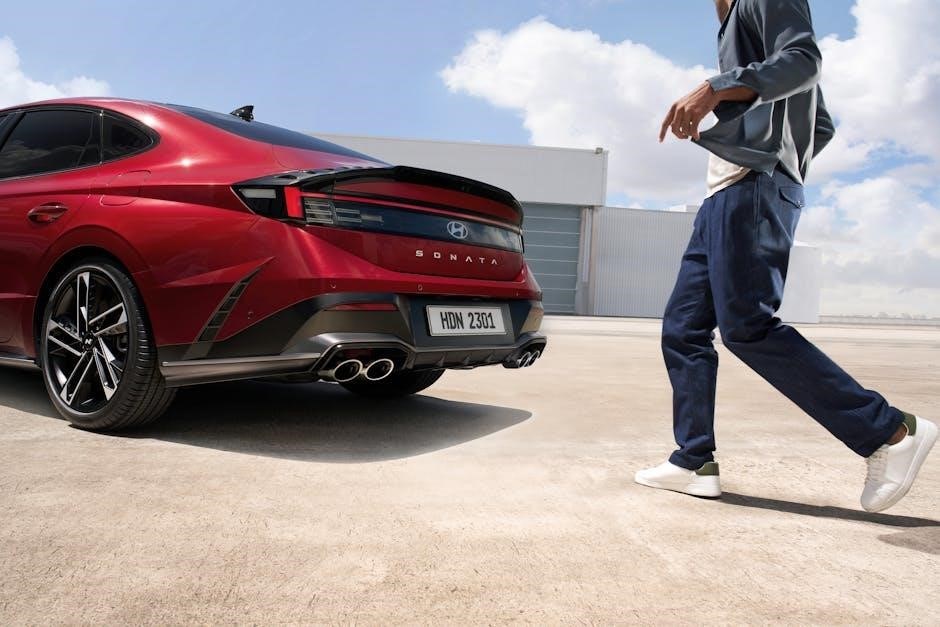
The PDF typically recommends replacing the engine air filter every 15,000 to 30,000 miles, though more frequent changes are advised for drivers in dusty or polluted environments. Regular inspection is also crucial; a visibly dirty filter should be replaced immediately. Ignoring this maintenance item can lead to increased engine wear and potential long-term damage, as detailed within the official service documentation.
Cabin Air Filter
The Hyundai Sonata service schedule PDF highlights the importance of the cabin air filter for maintaining a healthy and comfortable in-cabin environment. This filter cleans the air entering the vehicle’s ventilation system, removing dust, pollen, mold spores, and other airborne particles. A clean cabin air filter improves air quality, benefiting passengers, especially those with allergies or respiratory sensitivities.
The recommended replacement interval, as outlined in the PDF, is typically every 15,000 to 30,000 miles, or annually, depending on driving conditions. Drivers frequently exposed to dust, smoke, or heavy traffic should consider more frequent replacements. A clogged cabin air filter reduces airflow and can strain the HVAC system, impacting its efficiency and performance.
Fuel Filter
The Hyundai Sonata service schedule PDF details the fuel filter’s crucial role in maintaining engine health. This filter prevents contaminants like dirt, rust, and debris from reaching the engine, safeguarding vital fuel system components such as the fuel pump and injectors. A clean fuel filter ensures optimal fuel delivery, contributing to efficient engine operation and preventing potential damage.
Replacement intervals, as specified in the PDF, vary depending on the Sonata model year and engine type, generally falling between 30,000 and 60,000 miles. Ignoring fuel filter replacement can lead to reduced fuel efficiency, poor engine performance, and potentially costly repairs. Regularly checking and replacing the fuel filter, as per the schedule, is a proactive maintenance step.

Scheduled Maintenance Intervals (By Mileage)

The Hyundai Sonata PDF outlines specific maintenance tasks at 7,500, 15,000, 30,000, 45,000, and 60,000-mile intervals, ensuring optimal vehicle condition.
7,500 Mile Service
At the 7,500-mile mark, your Hyundai Sonata requires a foundational service check to maintain its performance and reliability. This initial service, detailed within the official Sonata service schedule PDF, primarily focuses on essential fluid inspections and top-ups. Technicians will meticulously examine engine oil levels, ensuring proper lubrication, and replenish if necessary.
Furthermore, a comprehensive tire inspection is conducted, checking for wear, damage, and correct inflation pressure. All fluid levels – including brake fluid, coolant, power steering fluid, and windshield washer fluid – are carefully assessed and topped off to guarantee optimal functionality. A multi-point inspection covers vital components, identifying potential issues early on. This proactive approach helps prevent more significant problems down the road, keeping your Sonata running smoothly and efficiently.
15,000 Mile Service
The 15,000-mile service for your Hyundai Sonata, as outlined in the official service schedule PDF, builds upon the 7,500-mile check with more detailed inspections. This service includes repeating all checks from the previous interval – oil and fluid level top-ups, tire inspection, and a multi-point inspection of key components.
Additionally, the 15,000-mile service often incorporates a cabin air filter replacement, ensuring clean air circulation within the vehicle. Technicians will also inspect the brake pads for wear and tear, providing an assessment of their remaining life. A thorough examination of belts and hoses is performed to identify any signs of cracking or deterioration. This comprehensive service helps maintain optimal performance and addresses potential issues before they escalate, contributing to the longevity of your Sonata.
30,000 Mile Service
At 30,000 miles, your Hyundai Sonata requires a more extensive service, detailed within the official service schedule PDF. This interval encompasses all previous checks – fluid level top-ups, tire rotations, and comprehensive inspections. Crucially, this service typically includes an engine air filter replacement, vital for maintaining optimal engine performance and fuel efficiency.
Furthermore, the 30,000-mile mark often necessitates a brake fluid flush to remove contaminants and ensure effective braking. Technicians will also inspect the fuel lines and connections for leaks or damage. A detailed examination of the exhaust system is performed, checking for corrosion or wear. This service is designed to proactively address potential issues and maintain the Sonata’s reliability, ensuring continued safe and efficient operation.
45,000 Mile Service
The 45,000-mile service for your Hyundai Sonata, as outlined in the official PDF schedule, builds upon previous maintenance. It includes all standard checks – fluids, tires, and visual inspections – alongside specific component assessments. A critical element at this stage is the cabin air filter replacement, ensuring clean air circulation within the vehicle’s interior for passenger comfort and health.
Additionally, technicians will thoroughly inspect the drive belts for cracks, fraying, or wear, recommending replacement if necessary. The cooling system receives a detailed inspection, checking hoses and connections for leaks. This service also involves a comprehensive brake system inspection, including pads, rotors, and lines. Proactive maintenance at 45,000 miles helps prevent costly repairs and maintains the Sonata’s overall performance.
60,000 Mile Service
Reaching 60,000 miles on your Hyundai Sonata necessitates a more extensive service, detailed within the official service schedule PDF. This milestone incorporates all previous maintenance items, plus crucial inspections and replacements. A primary focus is the inspection and potential replacement of the spark plugs, vital for optimal engine combustion and fuel efficiency. The drive belt is again scrutinized for wear and tear, with replacement recommended if needed to prevent unexpected failures.
Furthermore, the cooling system undergoes a complete service, potentially including a coolant flush and refill. A thorough transmission fluid inspection is also performed, assessing its condition and recommending a service if necessary. This comprehensive 60,000-mile service ensures continued reliability and performance for your Sonata.
Major Service Items
Significant Sonata maintenance, outlined in the service PDF, includes spark plug replacement, timing belt/chain checks, drive belt inspections, cooling system services, and transmission fluid changes.
Spark Plug Replacement
Spark plug replacement is a crucial element of Hyundai Sonata maintenance, detailed within the official service schedule PDF. The interval for replacement varies depending on your Sonata’s engine and the type of spark plugs originally installed – typically ranging from 30,000 to 100,000 miles. Ignoring this service can lead to diminished fuel efficiency, rough idling, and potential engine misfires.
The service PDF will specify the correct spark plug type for your specific model year and engine. Using the wrong spark plugs can negatively impact performance and even cause engine damage. It’s highly recommended to have a qualified technician perform this service, as improper installation can also lead to issues. Regular spark plug replacement ensures optimal combustion and contributes to the overall health and longevity of your Hyundai Sonata’s engine.
Timing Belt/Chain Inspection & Replacement
The Hyundai Sonata’s service schedule PDF outlines critical inspections and potential replacement of the timing belt or chain. Many newer Sonata models utilize a timing chain, designed for longer life, while older models may have a timing belt requiring periodic replacement. The PDF details the recommended inspection intervals, typically around 60,000 to 100,000 miles, depending on the model year and engine.
A failed timing belt or chain can cause catastrophic engine damage, so adherence to the schedule is paramount. Replacement is a complex procedure best left to qualified technicians. The service PDF will specify the correct procedure and any necessary components. Ignoring this maintenance item can result in significant repair costs, making regular inspection and timely replacement essential for your Sonata’s reliability.
Drive Belt Inspection & Replacement
Your Hyundai Sonata’s service schedule PDF emphasizes regular drive belt inspections. These belts power vital components like the alternator, power steering pump, and air conditioning compressor. Cracks, fraying, or glazing indicate the need for replacement, preventing potential breakdowns. The PDF specifies inspection intervals, generally around 30,000 to 60,000 miles, but visual checks during other services are also recommended.
A broken drive belt can leave you stranded and potentially cause secondary damage. Replacement is relatively straightforward, but proper tensioning is crucial. The service PDF provides detailed instructions and torque specifications. Prioritizing drive belt maintenance ensures continued operation of essential systems and avoids costly repairs down the road, contributing to your Sonata’s overall dependability.
Cooling System Service
The Hyundai Sonata service schedule PDF highlights the importance of consistent cooling system maintenance. This includes regular coolant flushes and inspections of hoses, the radiator, and the water pump. Coolant degrades over time, losing its ability to effectively regulate engine temperature, potentially leading to overheating and severe engine damage. The PDF recommends a complete coolant flush every 30,000 to 60,000 miles, depending on the Sonata model year and driving conditions.
Inspect hoses for leaks or cracks, and check the radiator for corrosion. Addressing these issues promptly prevents costly repairs. Maintaining a healthy cooling system is vital for engine longevity and optimal performance, ensuring your Sonata remains reliable for years to come. Refer to the PDF for specific coolant type recommendations.
Transmission Fluid Service
The Hyundai Sonata service schedule PDF emphasizes the critical role of transmission fluid maintenance. Transmission fluid lubricates internal components, facilitates smooth shifting, and dissipates heat. Over time, it degrades, losing its effectiveness and potentially causing transmission damage. The PDF outlines specific intervals for fluid checks and complete fluid exchanges, varying by model year and driving habits.
Typically, a transmission fluid inspection is recommended every 30,000 miles, with a full fluid change suggested around 60,000 miles, or sooner for vehicles subjected to severe driving conditions. Using the correct type of transmission fluid, as specified in the PDF, is crucial. Neglecting this service can lead to costly transmission repairs or even failure, impacting your Sonata’s performance and reliability.
Specific Sonata Model Year Considerations
Hyundai Sonata service schedules differ slightly by year; the PDF provides tailored maintenance plans for 2015-2017, 2018-2020, and 2021-2024 models.
2015-2017 Sonata Service Schedule
For Hyundai Sonata models manufactured between 2015 and 2017, the service schedule emphasizes regular oil changes – typically every 7,500 to 10,000 miles with conventional oil, or extended intervals with synthetic. Tire rotations are crucial every 5,000 miles to ensure even wear.
Fluid level checks (brake, coolant, power steering, and windshield washer) should occur with each oil change. Filter replacements, including the engine air and cabin air filters, are recommended annually. At 30,000 miles, inspect the drive belt and consider a coolant flush.
Significant services at 60,000 miles include spark plug replacement and a thorough inspection of the timing chain. Always consult the official Hyundai Sonata service schedule PDF for precise details specific to your vehicle’s engine and driving conditions, as variations may apply.
2018-2020 Sonata Service Schedule
The 2018-2020 Hyundai Sonata service schedule builds upon previous years, maintaining the emphasis on regular maintenance. Oil changes remain critical, with synthetic oil allowing for extended intervals – potentially up to 7,500-15,000 miles depending on driving habits. Tire rotation every 7,500 miles is still recommended for optimal tire life.
Consistent fluid level checks (brake, coolant, power steering, windshield washer) are vital during each service. Filter replacements – engine air, cabin air, and fuel filter – should be performed as outlined in the official PDF. At 30,000 miles, a comprehensive inspection of belts and hoses is advised.
Major services around 60,000 miles include spark plug replacement and a detailed inspection of the timing chain. Refer to the official Hyundai Sonata service schedule PDF for precise specifications tailored to your specific engine configuration and usage.
2021-2024 Sonata Service Schedule
The 2021-2024 Hyundai Sonata service schedule continues the trend of preventative maintenance, with a focus on maximizing vehicle lifespan. Oil changes, utilizing synthetic blends or full synthetic, are crucial, with intervals potentially extending to 10,000-15,000 miles based on driving conditions. Tire rotation remains a key component every 7,500 miles.
Regular fluid checks – brake, coolant, power steering, and windshield washer fluid – are essential at each service appointment. Filter replacements (engine air, cabin air, and fuel) follow a defined schedule within the official PDF. Around 30,000 miles, a thorough inspection of belts and hoses is recommended.

Significant services around 60,000 miles include spark plug replacement and a detailed timing chain assessment. Always consult the official Hyundai Sonata service schedule PDF for precise details specific to your engine and driving patterns.

Troubleshooting Common Issues & Service Alerts
Reports indicate potential DSG gearbox issues (jerking, harsh shifts) and ICCU exchange problems in some Sonata/IONIQ 5 models; monitor Bluelink service functionality.
DSG Gearbox Problems (If Applicable)
Certain Hyundai Sonata models equipped with a Dual-Clutch Transmission (DSG) have reported experiencing issues. Owners have detailed symptoms including noticeable jerking during initial acceleration, particularly from a standstill. A significant and forceful impact can occur when shifting into reverse gear (R). Furthermore, some drivers have observed pronounced clutch shuddering or jerking while maintaining highway speeds, indicating potential internal component wear or control module malfunctions.
If you encounter these symptoms, promptly schedule a diagnostic inspection with a certified Hyundai technician. Ignoring these issues can lead to more extensive and costly repairs. The technician will assess the transmission fluid level and condition, scan for diagnostic trouble codes, and potentially perform software updates to address any control system anomalies. Early intervention is crucial for preserving the longevity and smooth operation of your Sonata’s DSG gearbox.
ICCU Exchange Issues (IONIQ 5 related, potential overlap)
While primarily affecting the Hyundai IONIQ 5, potential overlap exists regarding the Integrated Control Charging Unit (ICCU). Reports indicate delays and difficulties in obtaining replacement ICCU units for vehicles requiring exchange due to potential defects. This supply chain disruption can impact service scheduling and lead to extended wait times for IONIQ 5 owners needing this critical component replaced.
Sonata owners should be aware of this broader issue as it highlights potential challenges within Hyundai’s parts supply network. Although the ICCU is specific to electric vehicles, similar logistical hurdles could conceivably affect the availability of other parts for various Hyundai models, including the Sonata. Proactive communication with your service center regarding estimated repair timelines is highly recommended.
Bluelink Service Issues
Recent reports indicate changes to Hyundai’s Bluelink connected car services, specifically regarding subscription costs; Previously offered as a complimentary service, Bluelink functionality is now subject to subscription fees after an initial trial period. Sonata owners relying on Bluelink for remote vehicle control, diagnostics, and safety features should verify their subscription status and associated costs.
These changes may not directly impact the physical service schedule, but understanding Bluelink’s operational status is crucial for maximizing your Sonata’s features. Ensure your Bluelink account is active to receive important vehicle health alerts and service reminders. Contact Hyundai customer support or your dealership for detailed information regarding Bluelink subscription options and potential service disruptions.